Dear friends,
Since this pandemic landed on South Africa’s shores, I have realised that a lot of the ramifications it brings with it are out of my control – a feeling I am not used to. However, I have had to learn to accept this. In an attempt to gain some clarity in these uncertain times, I started consuming a lot of informational material (reports, webinars and articles). This was in order to get a sense of what this crisis means for our business in particular. Unfortunately, much of the available content didn’t bring home what – aside from the obvious (no revenue for the foreseeable future), this pandemic means for a business like ours. To gain some insight, I reached out to some industry peers, whose input has helped improve my own understanding.
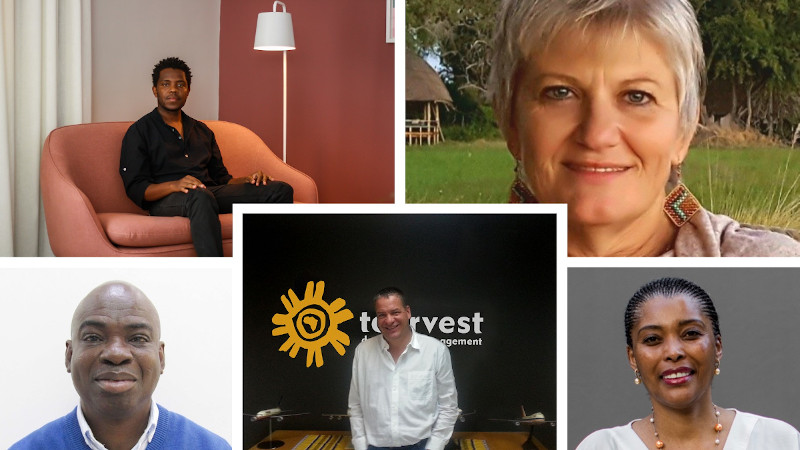
It is important to mention that this crisis has presented a set of challenges, which are novel in nature and mean that all roleplayers in our sector are having to learn as they go. Myself included. That said I would like to thank the following people, whose informed input has had an invaluable influence on this article:
• Mr. Martin Wiest: CEO of Tourvest Destination Management
• Mrs. Thembi Kunene-Msimang: COO of Tourvest IME
• Mr. Kwakye Donkor: CEO of African Tourism Partners
• Mrs. Alessandra Allemann: CEO of African Soulstice
• Mr. Bheki Dube: CEO of Curiocity Hostels
• My staff at Tour2.0

I would like to begin on a personal note. I recently recalled an experience from my high school days; more specifically, having to do with a route I walked on my way home from school. This route was scenic. Its quiet Jacaranda-lined streets provided much needed shade, and respite from the main roads with their honking taxis and whooshing traffic. As ideal as this route was, there was a corner I dreaded and had to confront daily. That corner constantly occupied my mind. It was a known hang-out spot for a neighbourhood scoundrel. What made things even worse was that one never knew when he would be there. The uncertainty added anxiety to my daily walk. For some time, I considered myself lucky because, unlike some of my peers, I hadn’t encountered him. My lucky streak would last all of 3 years, until the inevitable happened.
I can liken my entrepreneurship journey to my route to and from school. The COVID-19 pandemic is the neighbourhood scoundrel – a challenge I was inevitably going to encounter on my journey. I just didn’t know what shape it would appear as and when it would appear. With so much out of our control, this pandemic has put many of us in a position where we must confront some of our fears, and acknowledge the following:
• Some companies will not survive this pandemic
• The pandemic has left us with more questions than answers
• Many of us will have to retrench
• Things are, most likely, not going to be the same again
• Many of us will need to reinvent ourselves
For us, who plan on doing everything we can to survive this, the question we need to ask ourselves is: how do we remain relevant in a COVID-19 world?
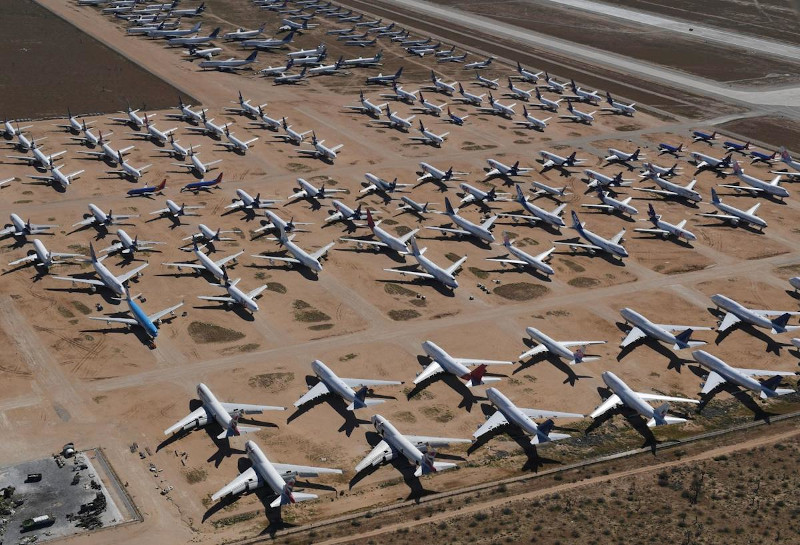
Our current reality is that our sector’s recovery will initially happen domestically. Then following this, regionally (through well-orchestrated travel bubbles), and then inter-continental travel will resume. To prepare for this, we will have to implement measures to give our clients full confidence that we have taken all the steps to reduce transmission. Domestic tourism - in the form of Meetings, Incentives and Events (MICE), business travel and visiting friends and relatives (VFR) - will lead the recovery. This will be driven by people yearning a difference in scenery. We also know that key in-person business meetings and functions need to happen. However, it is important to note that just because the domestic market will be the first to kick-off, it doesn’t mean that individuals and companies will have the financial means to engage in tourism activities, travel and meetings as well as events that require substantial financial commitment. This is due to the negative economic impacts of the lockdown, and how this is affecting both household and corporate budgets. Other challenging factors are:
• High infection rates in key source markets: Numbers of infections in key source markets are significantly higher than those within various destinations, on the African continent, which means that many source markets may choose to prolong their lockdowns and travel bans.
• Cautious psychology of the traveller: Due to the uncertainty and fear surrounding the COVID-19 pandemic, travellers are likely to travel to nearby destinations that they are familiar with, where contact with others is limited. This will likely continue until a vaccine and greater knowledge around COVID-19 is more widely available.
• Financial situation of the traveller: Travellers - within countries with limited resources to shield them from the financial fallout caused by the pandemic - may find that they would have to dip into budgets set aside for travel, in order to cater for basic needs, and would rather cancel or postpone their trips.
• Survival of airlines: Airlines that survive this period, will likely focus on sustainable short-haul routes initially and only tackle long-haul routes, like South Africa, when it is financially viable. Affordable air travel is an essential factor to the success of destinations, and with the new proposed seating arrangements - geared at halting the transmission of COVID-19 on planes, we are likely to see an increase in the cost of air travel, thus further limiting the number of customers that can afford to travel by air.
The optimist in me, however, is determined to find opportunity even under this crisis. This has prompted me to distill the key take-aways from my conversations, which have helped me. My hope is that these might also help you chart a way forward for your business in a COVID-19 world:
• MICE: MICE companies that will prosper will host meetings & events which comprise a hybrid of in-person and videotelephony activities, across different venues, instead of hosting all delegates under one roof.
• Venue owners: The venue providers that will prosper will adhere to the hygiene standards adopted by the sector, invest in good internet infrastructure, which enables smooth videotelephony, and embrace a la carte individual meal offerings, instead of buffets.
• Transfers: Transfer providers that will prosper will adhere to both the hygiene (e.g. vehicles must be sanitised before and after each transfer and drivers have to wear masks and gloves), and capacity (e.g. 70% occupancy in vehicle) standards adopted by the sector.
• Guides: Guides that will prosper will work on being audible whilst wearing masks, adhere to social distancing, wear gloves, and have extra sanitiser and gloves for guests in need.
• Tour operators: Tour operators that will prosper will ensure that all the points-of-interest on an itinerary adhere to the industry adopted standards (hygiene, capacity, social distancing etc.).
• Accommodation: Accommodation providers that will prosper will streamline their check-in processes in order to reduce the potential of crowds, reconfigure their rooms to prioritise space, and streamline their breakfast process for a large percentage of guests eating breakfast in their rooms.
• Domestic market: The providers that will prosper will offer experiences and activities, which guests cannot book or do on their own, at a price that is palatable to the domestic market.
• African market: Intra-continental travel is set to recover sooner than inter-continental travel, and due to this there is an opportunity to build your African client base, by marketing your product(s) within the continent. South African Tourism has great insights regarding building your client base on our continent. I recommend working with their Trade Relation Managers to achieve this, and in addition to this I would also register as a member with African Tourism Partners.
• Rate freeze: In order to revitalise our sector, many Operators and Agents have requested that suppliers maintain 2020 rates in 2021. I understand and support this, however, I would recommend suppliers factor in the additional cost of COVID-19 compliance (sanitisers, gloves etc.) and consider how this affects your rate before you agree to this.
• Survive: The most important thing is to do whatever is possible to survive this period.

One key element that regularly emerged during my discussions, especially with fellow entrepreneurs, which I nevertheless believe is relevant to everyone (freelancers, business owners and employees) affected by this pandemic is managing your psychological outlook. This is key! I have found that this was essential to bracing myself for the survival hurdle. In times of crisis and uncertainty, our minds can be our best or worst enemies, depending on where and how far we allow it to go. A helpful way, I have found, is maintaining a routine aimed at keeping me engaged in my business – a routine that still gives me a sense of daily incremental progress.
If you are wondering what happened when I finally encountered the neighbourhood scoundrel; once it had peaked, my anxiety had to give way to relief. The elusive figure was finally before me. I decided to make the first move and offer something small to get onto cordial terms and guarantee my survival. In retrospect, I’ve come to realise that it was the time I spent on my daily walks home that enabled me to think about how I would respond when I finally encountered this inevitable challenge. This pandemic has presented many of us with a gift, albeit unpleasant: time. Let’s use this time to plan our response to this crisis. Our continued survival depends on these small sacrifices.
Yours in tourism,
Daniel Adidwa
Did you enjoy this article?